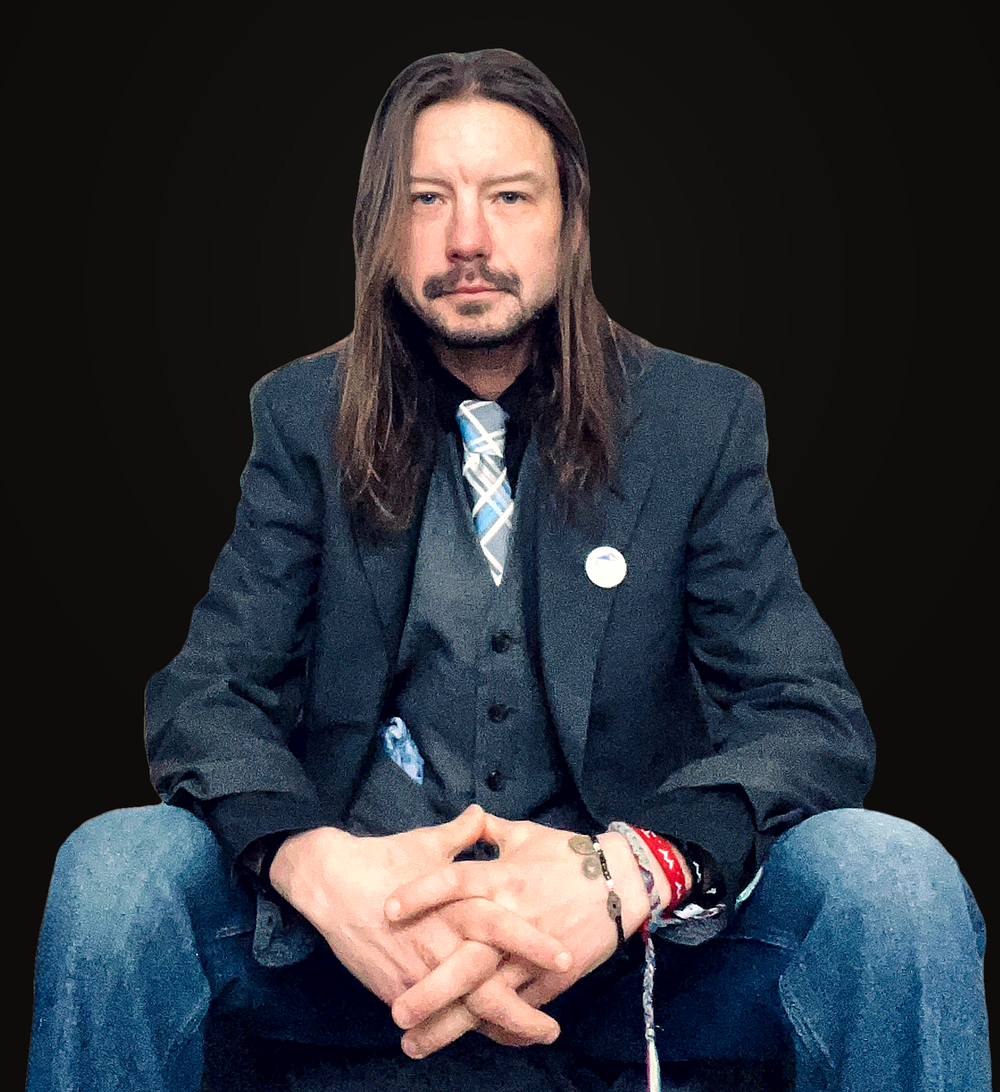
"I don't consider myself a consultant. I am more like an assassin of problems."
The Origin
It started early.
Watching my father build a new house with his own two hands. And watching my grandfather fix typewriters at the dinner table every day after school.
Then one night, my family's own dinner table was flipped upside down—and suddenly everything changed. A childhood fractured by a divorce of Shakespearean proportions left me struggling through my adolescence, barely finishing high school with a GED, floating around with no real direction or purpose to speak of.
My first job at 17 was in a restaurant. Five years later, I was working at the busiest Applebee's in the world, in Bradenton, Florida. A year later, I was back in Michigan.
What followed was years of feeling stuck in motion, a sense of directionlessness that was paralyzing and feeling undervalued at every job I ever excelled at.
This led to patterns of recurring bouts with depression, self-remedied by drink, drugs, and late night juvenile debauchery—the kind of lifestyle that, unbeknownst to me at the time, would become inseparable from the people and culture surrounding me.
But then something happened that would ultimately change the course of my life.
One night, a conversation with a close family friend led to him proposing that I accept an unusually absurd offer. The kind of offer that a guy like me at the time who had no money, no job, and only five cigarettes left in his pocket would be a fool to refuse.
The offer was simple.
"I'll pay you 100 bucks a day to sit there, watch, and get high."
This was like going undercover. Because what I was watching for was people stealing money.
The money came from the sale of illegal marijuana through a newly formed marijuana consignment business. The two owners were mutual friends. In the beginning, they hired three guys to run the store. But despite an overwhelming amount of business, the owners soon began to notice that they were losing money every month—eventually, around $4,000.
On my third day of sitting, watching, and getting high for free, I watched one of the employees take the money bag home. It contained roughly $1,150.
When we all returned to work the next day, he had the bag, but the store's money was gone.
Out of that turmoil, I quickly became the manager of the entire operation. Within the next year, we made somewhere close to $1 million. What I thought, at first, was just a favor to a friend — it quickly turned into something more permanent and profitable. I confidently thought I was looking at a successful career in cannabis.
Then in 2013, a raid on my house and a federal indictment stripped me of that confidence and with it, everything else—my identity, my hard work, my possessions, my plans, but most importantly, my freedom.
The next three years were difficult.
But not because I had to get sober and all of a sudden start following the law. But rather because I had to learn how to change my thoughts and behaviors—and, more importantly, over time, how I perceived my own value.
I obviously didn't change overnight. And I can tell you it didn't happen at the end of my three years on federal parole. And it didn't happen when I later achieved things I never dreamed I would. That's because it's not a happening, it's a slow progression. All good things worth doing come with time.
My hobbies, interests and motivations
I am a writer of fiction, nonfiction, and academically speculative work that explores human psychology through the lens of meaning and music.
I am a passionate advocate for children who are survivors of parental alienation or are currently experiencing it. As a victim myself, I believe that the most important thing an adult can do for a child during a divorce is to make them feel seen, heard, and absolutely certain that they're not going to go through the rest of their life without the relationship of an otherwise caring and loving parent.
I am also a survivor of Tetralogy of Fallot, a rare but serious genetic heart defect that affects 1 in 2,000 births. As a receiver of 5 separate surgeries throughout my life, I am innately passionate about the CHD community.
Below is a demo of an app that I wish my parents had when I was born.
Heart of the Matter
Real-world quality of life information for families facing a Tetralogy of Fallot diagnosis. Research made human.